
Last updated October 31, 2026
ADU Cost Breakdown: The Laguna Hills Homeowner’s Reference for 2026
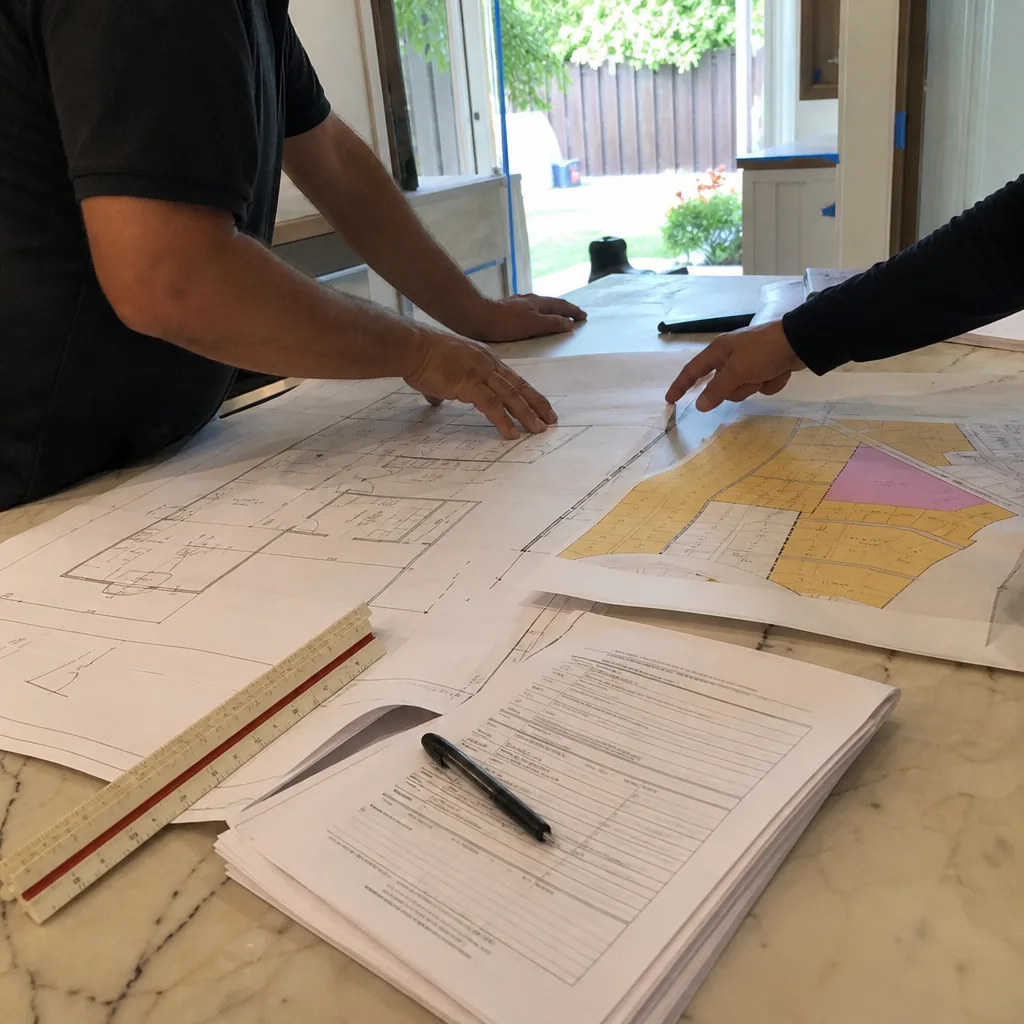
The $150,000 ADU you read about in a national real estate article was probably built on a flat lot in Sacramento with no HOA, no utility undergrounding requirement, and a neighbor who happened to be the contractor. In Laguna Hills, that same unit starts at $220,000 before you’ve touched a finish. The gap isn’t markup or greed. It’s what happens when you build on hillside terrain with Orange County labor rates, a school district that charges per-square-foot fees, and an HOA that wants architectural drawings before you can even file with the city. This guide breaks down where every dollar actually goes in a 2026 Laguna Hills ADU build, from the first soils report to the final kitchen cabinet pull, and our ADU Permits, Codes & Inspections in CA: What You Need to Know explains the regulatory side in detail. You’ll leave with a number you can plan around, not a national average that has nothing to do with your lot.
Quick Answer
An attached one-bedroom ADU in Laguna Hills runs $190,000 to $260,000 in 2026. A detached two-bedroom unit with a full kitchen and one bathroom typically lands between $280,000 and $390,000. Your lot’s slope, your HOA’s review process, and the distance from the ADU to your existing utility connections are the three variables that push you toward the high end or keep you at the low end.
Table of Contents
- The Soft Costs Nobody Quotes You: Permits, School Fees, and HOA Review in Laguna Hills
- Utility Extension Costs: The Deep-Lot and Hillside Variable
- Prefab vs. Site-Built in Laguna Hills: What the Sticker Price Leaves Out
- Kitchen and Bathroom Finish Tiers: What Holds Rental Value in South OC
- ROI Math: Laguna Hills Rental Rates and Realistic Break-Even Timelines
- How ADU Financing Works in 2026 and What It Changes About Your Budget
- Construction Timeline: What Actually Takes Time in Laguna Hills
- Common Mistakes to Avoid
- When to Call a Professional
- Frequently Asked Questions
The Soft Costs Nobody Quotes You: Permits, School Fees, and HOA Review in Laguna Hills
Soft costs are the line items that don’t involve lumber, concrete, or drywall, and in Laguna Hills they’re higher than most Orange County homeowners expect. We’ve seen soft costs alone hit $38,000 on a single detached ADU. Here’s the breakdown.
City of Laguna Hills building permit fees for an ADU typically run $4,000 to $7,500 depending on square footage and fixture count. Plan check adds another $1,200 to $2,000. These are payable at submittal, not completion, so they’re due within the first 60 days of your project. If your lot is on a hillside, you’ll also need a soils report before structural drawings are approved. A geotechnical engineer charges $2,500 to $5,000 for a standard ADU site, and if the report flags slope stability concerns, expect a follow-up investigation and potentially a retaining wall or deepened foundation that wasn’t in the original estimate.
School district fees are the line item that surprises homeowners moving to Laguna Hills from out of state. California law caps school impact fees on ADUs under 750 square feet, but units over that threshold pay the full fee schedule. Depending on your tract, you’re in either Saddleback Valley Unified or Capistrano Unified. Current developer fees run $2.80 to $4.10 per square foot of new construction. On an 800-square-foot ADU, that’s roughly $2,200 to $3,300. It’s not the biggest line item, but it’s due at permit issuance and never appears in a builder’s base quote unless you ask.
If your property is in one of Laguna Hills’s many HOA-governed communities, budget $500 to $2,500 for architectural review. HOAs in tracts like Nellie Gail Ranch and Moulton Ranch require drawings, site plans, and sometimes color boards before they’ll issue a letter acknowledging your project. That letter is mandatory for your city permit application. HOAs cannot legally prohibit ADUs under California law, but they can slow your timeline by 30 to 60 days and charge review fees per resubmission—watch for these issues in our ADU Warning Signs: A Laguna Hills Homeowner’s Reference Guide. If your first submission gets sent back for revisions, you pay again.
Plan on $12,000 to $18,000 in total soft costs for a detached ADU in Laguna Hills, assuming no unusual slope issues. That’s real money that comes out of your pocket before a single shovel hits dirt.
Utility Extension Costs: The Deep-Lot and Hillside Variable
This is where Laguna Hills diverges from flat-lot cities in a big way. Your ADU needs water, sewer, gas (if you’re not all-electric), and electrical service. If your main house sits on a standard 7,500-square-foot lot with the ADU going in the side yard, utility extension might cost $8,000 to $15,000. If you’re on a deeper lot or a hillside parcel where the ADU is set behind the house, that number climbs fast.
Trenching is the core cost driver. Contractors in South OC charge $75 to $150 per linear foot for standard 24-inch-deep utility trenching, depending on soil conditions. On a hillside lot in Laguna Hills, you’re often dealing with decomposed granite and hardpan that requires rock saw cutting, not just excavator work. A 60-foot utility run from the main house to a rear-placement ADU means $4,500 to $9,000 in trenching alone, then you add pipe, conduit, backfill, and compaction.
Electrical service is the big wild card. Many Laguna Hills homes built in the 1970s and 1980s have 100-amp panels that are already at capacity. An ADU with a kitchen (range, refrigerator, dishwasher), bathroom (exhaust fan, GFCI circuits), laundry, and HVAC can require a 200-amp panel upgrade. That upgrade runs $3,000 to $5,000. If you need a new subpanel at the ADU, add another $1,500 to $2,500. Southern California Edison charges connection fees that vary by meter configuration, and a second meter can run $1,200 to $3,500 depending on transformer capacity in your neighborhood.
Water and sewer with Irvine Ranch Water District are comparatively straightforward. IRWD fees for a new ADU connection typically run $1,500 to $4,000, and the district does not require a separate water meter for ADUs on the same parcel, which saves you money compared to some neighboring jurisdictions.
In our experience building ADUs across Laguna Hills, utility extension and connection costs run $10,000 to $28,000 on a typical project. The spread is that wide because lot configuration drives everything. A flat standard lot with the ADU adjacent to the house lands near the bottom. A hillside lot with a rear placement and a panel upgrade lands near the top.
Prefab vs. Site-Built in Laguna Hills: What the Sticker Price Leaves Out
Prefab ADUs are a genuinely good option for some Laguna Hills homeowners, and we source from several brands including Abodu, Plant Prefab, and Tuff Shed. But the sticker price on a prefab unit tells you about 60 percent of the story. The other 40 percent is site work, and in Laguna Hills site work is expensive.
A prefab unit from a brand like Abodu lists at $180,000 to $280,000 depending on size and finish level. That number covers the factory-built structure, interior finishes, and delivery. What it does not cover: foundation work, utility trenching, permit fees, site prep, crane rental, and the final utility hookups. On a Laguna Hills lot, those items add $60,000 to $110,000. A $220,000 prefab ADU becomes a $290,000 to $330,000 project by the time it’s move-in ready.
Crane day is a cost most homeowners never think about. Prefab units arrive on a flatbed truck and need to be lifted onto the foundation. Crane rental in Orange County runs $2,500 to $6,000 per day, and if the unit is being placed behind a house with tight access, you may need a larger crane or a longer reach, which can push that to $8,000. If overhead power lines require SCE to de-energize or shield lines during the lift, that’s a coordination cost and a delay.
Site-built construction in Laguna Hills runs $250 to $380 per square foot for standard finishes. A 750-square-foot detached ADU costs $190,000 to $285,000 in pure construction. That’s higher than the factory price of a comparable prefab, but site-built doesn’t have crane costs, and utility rough-in happens during construction rather than as a separate post-placement phase. The gap narrows more than most homeowners expect.
The real insight from Fletcher ADU Builders home projects across South OC is that prefab wins on timeline and predictability, while site-built wins on lot adaptability. On a tight lot with awkward access or irregular dimensions, site-built lets you place the unit exactly where it fits, and that flexibility translates into a better final product for hillside and odd-shaped Laguna Hills parcels. We’ve worked with both approaches, and the honest answer is that the right choice depends on your lot more than your budget.
Kitchen and Bathroom Finish Tiers: What Holds Rental Value in South OC
The finish level of your ADU’s kitchen and bathroom is the single biggest determinant of what you’ll charge in rent, and in South OC’s competitive ADU rental market, tenants know the difference between builder-grade laminate and stone countertops. Here’s a realistic tier breakdown for 2026.
Tier 1: Rental-Grade Finishes ($18,000 – $28,000 for kitchen and bathroom combined)
This tier gets you a functional ADU that rents quickly but not at a premium. Kitchen: stock cabinets from a big-box supplier, laminate countertops, a basic stainless steel appliance package (electric range, refrigerator, dishwasher), and vinyl plank flooring. Bathroom: prefabricated fiberglass shower surround, standard-height vanity with cultured marble top, and basic chrome fixtures. Nothing wrong with this tier. A Tier 1 ADU in Laguna Hills rents for $1,800 to $2,200 per month. But tenants who can afford South OC rents often pass on laminate counters when a comparable unit with quartz is available for $100 more per month.
Tier 2: Mid-Range Finishes ($28,000 – $42,000)
This is the sweet spot for most Laguna Hills rental ADUs. Kitchen: semi-custom cabinets with soft-close hardware, quartz countertops, a full-size stainless appliance package, and ceramic tile or premium LVT flooring. Bathroom: tiled shower with glass enclosure, comfort-height vanity with quartz top, and brushed nickel fixtures. Add recessed lighting with dimmers. A Tier 2 ADU rents for $2,300 to $2,800, and the $8,000 to $14,000 additional cost over Tier 1 typically pays for itself in 18 to 30 months of rent at those rates.
Tier 3: Design-Forward Finishes ($42,000 – $65,000+)
This is for homeowners planning multigenerational living or aiming at the top of the rental market. Kitchen: custom cabinetry, waterfall-edge quartz or natural stone, paneled appliances, under-cabinet lighting, and a pot filler if the layout allows. Bathroom: floor-to-ceiling tile, curbless shower with linear drain, floating vanity, and designer fixtures. One detail worth noting: we specify James Hardie fiber-cement siding on the exterior of our ADUs because it holds up in Laguna Hills’s coastal-influenced climate without the warping or moisture issues that cheaper materials develop within five years. That’s a material decision that protects the value of higher-end interior finishes. A Tier 3 ADU can rent for $2,900 to $3,400, but many owners at this tier are building for family, so rental math isn’t always the driver.
If you’re building with rental income as the primary goal, Tier 2 is where the math works. If you’re building for a parent or adult child, Tier 3 finishes make daily use genuinely pleasant, and that’s worth paying for. The bathroom and kitchen are the two rooms where tenants and family members form their impression of the entire unit, and our in-house bathroom remodeling in Tustin experience translates directly to ADU work. The same trades that handle a full home remodel install ADU finishes, which means the craftsmanship is the same as a primary residence.
ROI Math: Laguna Hills Rental Rates and Realistic Break-Even Timelines
An ADU in Laguna Hills is a real asset that generates real income, and the numbers in 2026 favor ownership more than they did two years ago. Here’s how the math actually works.
Current asking rents for ADUs in Laguna Hills and neighboring South OC communities run $2,200 to $3,200 for a one-bedroom, and $2,800 to $3,800 for a two-bedroom. The spread reflects finish level, parking availability, and whether the unit has a private entrance or shares a yard with the main house. A well-finished two-bedroom ADU with a private entrance and one dedicated parking space consistently rents near the top of that range.
Let’s run the numbers on a $320,000 two-bedroom detached ADU (Tier 2 finishes, standard lot conditions):
- Gross annual rent at $3,100/month: $37,200
- Operating costs (insurance, maintenance, vacancy reserve, property management if used): $5,500 to $7,500
- Net operating income: $29,700 to $31,700
- Cap rate on construction cost: 9.3% to 9.9%
Compare that to what a $320,000 investment produces elsewhere. A savings account pays maybe 4 percent. A rental property purchase at that price point in Orange County doesn’t exist. A 9-plus percent cash-on-cost return with appreciation upside is unusually strong.
If you finance the ADU, the math shifts. A home equity loan or HELOC in 2026 carries interest around 6.5 to 8.5 percent depending on your credit and LTV. On a $320,000 loan at 7.5 percent amortized over 20 years, monthly payment is roughly $2,578. That’s below the $3,100 rent, which means the ADU cash-flows about $500 per month even with debt service. Break-even on your down payment and closing costs runs 3 to 5 years, after which the rental income covers the loan and puts money in your pocket every month.
The more important long-term math is property value. Orange County appraisers increasingly value ADUs at 50 to 70 percent of their construction cost when calculating home equity. A $320,000 ADU adds roughly $190,000 to $225,000 in appraised value, which means your equity position improves immediately, even before rental income is counted. For homeowners in Laguna Hills neighborhoods like Moulton Ranch, Nellie Gail, and the flats near the civic center, an ADU is one of the few remaining ways to add meaningful square footage without moving.
How ADU Financing Works in 2026 and What It Changes About Your Budget
Financing an ADU in Laguna Hills in 2026 comes down to three main options, and the right one depends on how much equity you have and whether you want to keep your current mortgage untouched.
- Home equity line of credit (HELOC). Best for homeowners with significant equity and a preference for flexibility. You draw funds as construction progresses and only pay interest on what you use. Rates in 2026 run 6.5 to 8.5 percent, variable. The downside: your primary residence secures the loan, and if you sell before the ADU generates income, you’re carrying the full balance at sale.
- Cash-out refinance. Only beneficial if your current mortgage rate is higher than current refi rates, which is rare for homeowners who locked in rates before 2022. Most Laguna Hills homeowners with sub-4 percent mortgages should not refi into a 7 percent loan to fund an ADU. The interest cost over the life of the loan erases the rental income advantage.
- Construction loan converted to permanent financing. Some credit unions and local banks offer ADU-specific construction loans that convert to a fixed mortgage when the project is done. Rates are typically 0.5 to 1 point higher than conforming rates, but the loan is sized based on the projected after-build value of the property rather than current equity. This works for homeowners with limited equity but strong income. The catch: construction draws require inspections, which means a builder who can schedule work predictably. Delays cost money.
Whatever financing route you take, budget for carrying costs during construction. A 9-month build means 9 months of interest payments on drawn funds before the unit produces a dollar of rent. On a $250,000 draw at 7.5 percent, that’s about $1,500 per month in interest during peak construction. Build that into your budget from day one, and you won’t be surprised mid-project.
One practical note from our work with ADU builders in Tustin and the surrounding South OC market: lenders typically want to see a builder with a track record of completing ADUs, not a general contractor who does one ADU a year alongside kitchen remodels and additions. An ADU-exclusive specialist who works with established prefab brands and handles interior finishes in-house reads as lower-risk to an underwriter, and that can affect your loan terms.
Construction Timeline: What Actually Takes Time in Laguna Hills
Laguna Hills ADUs are not a 90-day project, and our ADU Emergency Preparedness Guide for Laguna Hills Homes covers why rushed builds create long-term risks. Anyone promising that timeline is either building unpermitted or hasn’t done the work here. Here’s a realistic breakdown, step by step.
- Design and drawings (4 to 10 weeks). Your designer or builder produces site plans, architectural drawings, structural calculations, and Title 24 energy compliance. If your lot requires a soils report, that runs parallel and adds time if the report triggers foundation redesign.
- HOA architectural review (2 to 8 weeks). Communities like Nellie Gail Ranch and Moulton Ranch hold periodic review meetings, not rolling approvals. If you miss a meeting date by a week, you wait a month.
- City plan check and permitting (8 to 16 weeks). The City of Laguna Hills has a relatively efficient planning department for ADU review under state streamlining laws, but plan check corrections and resubmittals are common. Budget two rounds of corrections, which is standard, not a sign of trouble.
- Site prep and utility rough-in (3 to 6 weeks). Demolition (if any), grading, trenching, foundation pour, and utility stub-outs. Hillside lots take longer; flat lots go faster.
- Structure and envelope (6 to 12 weeks). For site-built, this is framing, roofing, siding, windows, and exterior doors. For prefab, this is the factory timeline plus delivery, crane setting, and exterior sealing. Site-built is slower here. Prefab is faster.
- Interior finishes (8 to 14 weeks). Drywall, paint, flooring, kitchen cabinets and counters, bathroom tile and fixtures, plumbing trim-out, and electrical fixtures. Our in-house kitchen remodeling in Tustin and bathroom crews handle this phase as a single coordinated effort, which shaves time off the handoff between trades.
- Final inspections and occupancy (2 to 4 weeks). City inspection, utility final connections, and certificate of occupancy. If an inspection fails, you make corrections and re-queue.
The total realistic timeline for a Laguna Hills ADU is 10 to 16 months from initial drawings to move-in. Prefab units with simple sites can land at the low end. Hillside parcels with HOA review and utility challenges land at the high end. If someone quotes you six months, ask which steps they’re planning to skip.
Common Mistakes to Avoid
- Budgeting from a statewide cost average. A $150,000 ADU in Fresno is a $230,000 ADU in Laguna Hills. Use local numbers or you’ll run out of money halfway through. Orange County labor rates and hillside site conditions are non-negotiable cost factors.
- Forgetting the HOA review period. Missing an HOA meeting date can add six weeks to your timeline. Submit your architectural package early, and expect at least one round of revisions. HOAs in Laguna Hills can’t prohibit ADUs, but they can absolutely slow them down.
- Placing the ADU at the rear of a deep lot without pricing the utility trench first. A 60-foot trench for water, sewer, gas, and electrical can add $10,000 or more before considering the meter panel. Run the utility cost analysis before you commit to a placement.
- Choosing finishes without knowing your rental market. Over-building a rental ADU with Tier 3 finishes in a neighborhood where Tier 2 rents dominate means spending $20,000 extra for $150 more per month. Build to the market, not to a magazine photo.
- Skipping the soils report on a hillside lot. Trying to save $3,000 on geotechnical work on a slope can produce a foundation redesign that costs $30,000. The report is cheap insurance, and in Laguna Hills’s hillside tracts, it’s often required by the city anyway.
- Hiring a general contractor who does ADUs as a side line. An ADU-specific builder understands prefab brand trade-offs, utility coordination with IRWD and SCE, and the specific permit path in Laguna Hills. A general contractor learning on your project pays tuition with your money and your timeline.
- Not budgeting for carrying costs during construction. Interest on drawn construction funds piles up while the unit can’t generate rent. On a $250,000 draw, that’s $1,500 a month. Include it in the budget or watch your contingency disappear before framing starts.
When to Call a Professional
If your Laguna Hills property has any slope at all, if your lot is deeper than standard, or if your HOA requires architectural review, you should get a professional feasibility assessment before spending money on design drawings. The same applies if you’re deciding between prefab and site-built and want an honest comparison of total cost rather than sticker price. Fletcher ADU Builders offers free estimates in Laguna Hills. We’ll walk your site, assess utility routing and access, and give you a written cost range you can actually plan around. Call (855) 360-9836 to schedule your free estimate. We know these brands from the inside, what they deliver, what they don’t, and when each one makes sense for your specific lot.
Frequently Asked Questions
An attached one-bedroom ADU in Laguna Hills runs $190,000 to $260,000, and a detached two-bedroom with full kitchen and bathroom runs $280,000 to $390,000, including soft costs, utility extensions, and finishes. The range reflects lot conditions, finish tier, and whether you choose prefab or site-built. Call (855) 360-9836 for an exact quote on your property; estimates are free.
California law prevents HOAs from prohibiting ADUs outright, but Laguna Hills communities like Nellie Gail Ranch and Moulton Ranch still require architectural review before you can submit for city permits. Budget $500 to $2,500 for review fees and 2 to 8 weeks for the approval timeline. Your builder should manage this process for you.
Expect 10 to 16 months from initial drawings to certificate of occupancy. Design, HOA review, city plan check, site work, construction, and final inspections all take time, and hillside lots extend the timeline. Prefab units on simple sites can finish at the low end of that range; site-built on challenging lots lands at the high end.
Utility extension for a rear-placement ADU on a deep Laguna Hills lot typically costs $10,000 to $28,000, including trenching, conduit, pipe, connection fees to Irvine Ranch Water District, and any SCE electrical upgrades. A 200-amp panel upgrade adds $3,000 to $5,000 if your existing service is maxed out.
Prefab sticker prices look cheaper, but once you add foundation work, crane rental, site prep, and utility hookups, the total cost often lands within $20,000 to $40,000 of a comparable site-built unit. Prefab wins on timeline and predictability. Site-built wins on lot adaptability, especially for hillside and irregular parcels common in Laguna Hills.
If your property is on a hillside or in a geologically sensitive zone, the City of Laguna Hills will require a soils report before structural approvals. The report costs $2,500 to $5,000, and if it flags stability issues, you’ll need foundation engineering that can add $15,000 to $40,000 to the project. Flat-lot builds may not require one.
The Bottom Line
An ADU in Laguna Hills is a $220,000 to $390,000 investment in 2026, and the number that matters most to you depends on three things: your lot’s slope and configuration, your HOA’s process, and the finish level you choose. Budget for soft costs and utility extensions with the same seriousness you budget for lumber and drywall, because they’re not incidental. They’re structural. From prefab panels to polished kitchen finishes, one contractor, start to finish. That’s the difference between a manageable ADU project and a two-year headache. Get a local number before you commit to a plan. The right ADU for your property, not the only one we carry, starts with one phone call: (855) 360-9836.
Written by the team at Fletcher ADU Builders, serving Laguna Hills since 2016.